
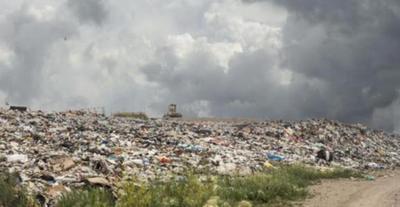
Seneca Meadows Landfill
Seneca Meadows, the largest landfill in New York, was supposed to shut down on December 31, 2025, when it reached capacity. However, Seneca Meadows continues to operate. The landfill remains open thanks to a legal loophole in the State Administrative Procedure Act (SAPA), which for years has allowed corporate polluters to operate while awaiting a final decision from the Department of Environmental Conservation (DEC). Meanwhile, our families, friends, and neighbors across the Finger Lakes continue to suffer from noxious odors and ongoing pollution, the landfill’s methane emissions continue to erode our state climate goals, and millions of gallons of PFAS-laden leachate continue to be trucked untreated to waterways across the state. This is unacceptable and deeply concerning.
And the DEC is still considering whether to grant the landfill’s operator, Waste Connections, a new permit that would enable Seneca Meadows to operate for 15 more years and expand its size by 47 acres and 7 stories. Though we have been preparing for the Public Comment Period for three years, the DEC has yet to accept Seneca Meadows’ most recent revision of its Draft Environmental Impact Statement (DEIS) as complete. Until that happens, that public comment period will not begin – but it could happen any day now.
Publicly-available data suggests that Seneca Meadows has been taking in less waste per day than it is permitted to accept, a move designed to delay the official moment when the landfill is deemed “full.” We have heard that the DEC is not monitoring the landfill’s capacity itself, but rather relying on Seneca Meadows to self-report on its remaining capacity. We, the public, have not been able to independently verify its actual capacity or know when the DEC should enforce closure if those limits are reached. But it is quite likely that SMI will be full before any expansion permits are issued. We have called on the DEC to explain how it is monitoring Seneca Meadows’ remaining capacity and commit to clear enforcement and closure actions if its capacity limits have been reached.
We continue to monitor these developments closely and are prepared to mobilize quickly when the public comment period opens. Stay tuned – because once it does, we need you to be ready to join us and make your voices heard.
Together, we can create a more robust, circular economy in New York, and it starts with preventing the state’s largest mega-landfill from expanding.
Survey Results
Last year, Seneca Lake Guardian conducted a community survey that received more than 700 responses. Among those who live within the 10 miles of the landfill, those respondents said…
Seneca Meadows Landfill Survey - Topline Takeaways
[THOSE WHO LIVE LESS THAN 10 MILES FROM LANDFILL]
515 total responses
Demographic Section
- 60% of respondents said they have or had kids who lived with them near the landfill
- 56% have children who go to school near the landfill
Health Section
- 167 respondents (32.4%) responded “None of the above” regarding symptoms. However, of those who did report symptoms, the top five answers for were:
- Irritated eyes, nose, or throat, such as a bloody nose, sore throat, sinus pressure, nasal congestion, runny nose (218 respondents, 42.3%)
- Headaches (219 respondents, 42.5%)
- Fatigue, anxiety, depression, difficulty sleeping, irritation (200 respondents, 38.8%)
- Light-headed, dizzy, brain fog (165 respondents, 32%)
- Cough, wheezing, difficult breathing (156 respondents, 30.3%)
- 26% of respondents said someone in their household had been diagnosed with cancer or heart disease since living near the landfill
- 27% of respondents said someone in their household had been diagnosed with asthma or respiratory issues since living near the landfill
- 33 respondents said someone in their household had had a miscarriage or stillbirth since living near the landfill
Quality of Life Section
- Over half of respondents (59%) said they had considered moving due to the landfill
- Over half of respondents (59%) said they experienced the landfill’s odors at school, and 44 people said someone in their household missed school due to the landfill’s odors.
- 80% said they experienced odors at home, and 49.1% said they did at work.
- Nearly half (49.1%) said they have had to move an event or gather indoors because of the odors.
- Dozens of respondents said they have reported the odors 10s or 100s of times, some daily or weekly, with very few saying they were satisfied with those reports.
- 82.7% of respondents said they were not satisfied with how their elected representatives had conducted themselves as it pertains to landfill expansion.